
What Is a Basic Housing Unit (BHU)? How Is It Different from a Subdivided Unit?
By Holling One-Stop BHU Certification | Last updated: 23 November 2026
Short answer: what is a BHU?
A Basic Housing Unit (BHU) is a domestic subdivided unit that meets the minimum standards of living conditions under the Basic Housing Units Ordinance (Cap. 658) and holds BHU recognition. To be lawfully let for residential use, a subdivided unit (commonly called a “劏房”) must be converted to the standards and recognised, or hold valid grace-period registration during the grace period.
- Subdivided unit (SDU): everyday term for a flat split into two or more rooms let separately; quality varies widely.
- BHU: an SDU certified by a specified professional and recognised by the Government; recognition is valid for 5 years.
- Key dates: grace-period registration closes on 28 February 2027; the unlawful-letting offence takes effect on 1 March 2027; the grace period ends on 28 February 2030.
How does the law define a “subdivided unit”?
Under the Government’s Code of Practice on the Minimum Standards of Living Conditions for Basic Housing Units, a subdivided unit is a flat in a domestic building (or the domestic part of a composite building) that has been partitioned in a way that differs from the reference building plan, forming two or more enclosed compartments, at least two of which are designed to be let under separate domestic tenancies. The whole flat containing the SDUs is called the host flat.
In other words, if two or more rooms in a flat are each let separately for residential use, the flat is generally within the regime. You can use the Government’s scope checker for a preliminary check.
BHU vs ordinary subdivided unit
| Item | Ordinary SDU | BHU |
|---|---|---|
| Legal status | From 1 March 2027, letting without valid registration or recognition is an offence | Valid recognition; may be lawfully let for residential use |
| Size | No uniform minimum | Internal floor area at least 8 m² |
| Headroom | No uniform minimum | At least 2.3 m floor to ceiling; at least 2 m to the underside of beams |
| Fire safety | Partition materials, doors and corridor widths vary | To Buildings Ordinance standards; a separate fire detector in each SDU; corridors at least 0.75 m or 1.05 m wide (depending on the existing fire door) |
| Toilet | Sometimes shared or on a balcony | A separate, enclosed and waterproofed toilet in each unit |
| Water supply and sink | Not always provided | A water supply point and sink outside the toilet |
| Lighting and ventilation | Some rooms have no window | Openable window + artificial lighting + mechanical ventilation (5 air changes per hour) |
| Water and electricity meters | Often shared by the landlord | Separate water and electricity meters from the Water Supplies Department and power company |
| Certification | None | Site inspection and a signed certification report by a specified professional |
These eight areas are the Government’s eight minimum standards for BHUs; the detailed requirements are set out in the Code of Practice.
What is outside the BHU regime?
The Government lists the following as outside the Basic Housing Units Ordinance:
- premises specified in Part 2 of Schedule 4 to the Ordinance, such as bedspace apartments, hotels or guesthouses, residential care homes for the elderly or persons with disabilities, and child care centres;
- the non-domestic parts of composite buildings, commercial buildings and industrial buildings;
- illegal structures such as squatters, and unauthorised works on rooftops, flat roofs, lanes, light wells or yards;
- flats in New Territories Exempted Houses.
These premises are regulated by other laws and cannot be “legalised” through BHU recognition. For more situations, see Which Flats Are Not Regulated by the Basic Housing Units Ordinance?
When must SDUs become BHUs?
| Date | What happens |
|---|---|
| 1 March 2026 | The Ordinance takes effect (except the unlawful-letting offence); grace-period registration and BHU recognition open |
| 28 February 2027 | Grace-period registration closes (free, Form REG-01) |
| 1 March 2027 | The unlawful-letting offence takes effect; enforcement begins against SDUs without valid registration or recognition |
| 1 September 2029 | Countdown period begins: no new tenancy for units without recognition |
| 28 February 2030 | Grace period ends; units not converted and recognised will face enforcement |
For registration eligibility and documents, see BHU Registration Deadline; for how registration and recognition differ, see Grace-Period Registration vs BHU Recognition.
What are the usual steps to convert an SDU into a BHU?
- Assessment: check each SDU against the eight standards and list the items that fall short.
- Conversion works: for example replacing partitions or doors, adding a separate toilet, installing mechanical ventilation, and applying for separate water and electricity meters. Minor works follow the Buildings Department’s Minor Works Control System.
- Certification: a specified professional inspects the site and issues a certification report within 14 calendar days after the last inspection.
- Recognition application: submit Form BHU-01 within 28 calendar days of the report date. The application fee is $3,000 per SDU, with early-bird reductions or waivers.
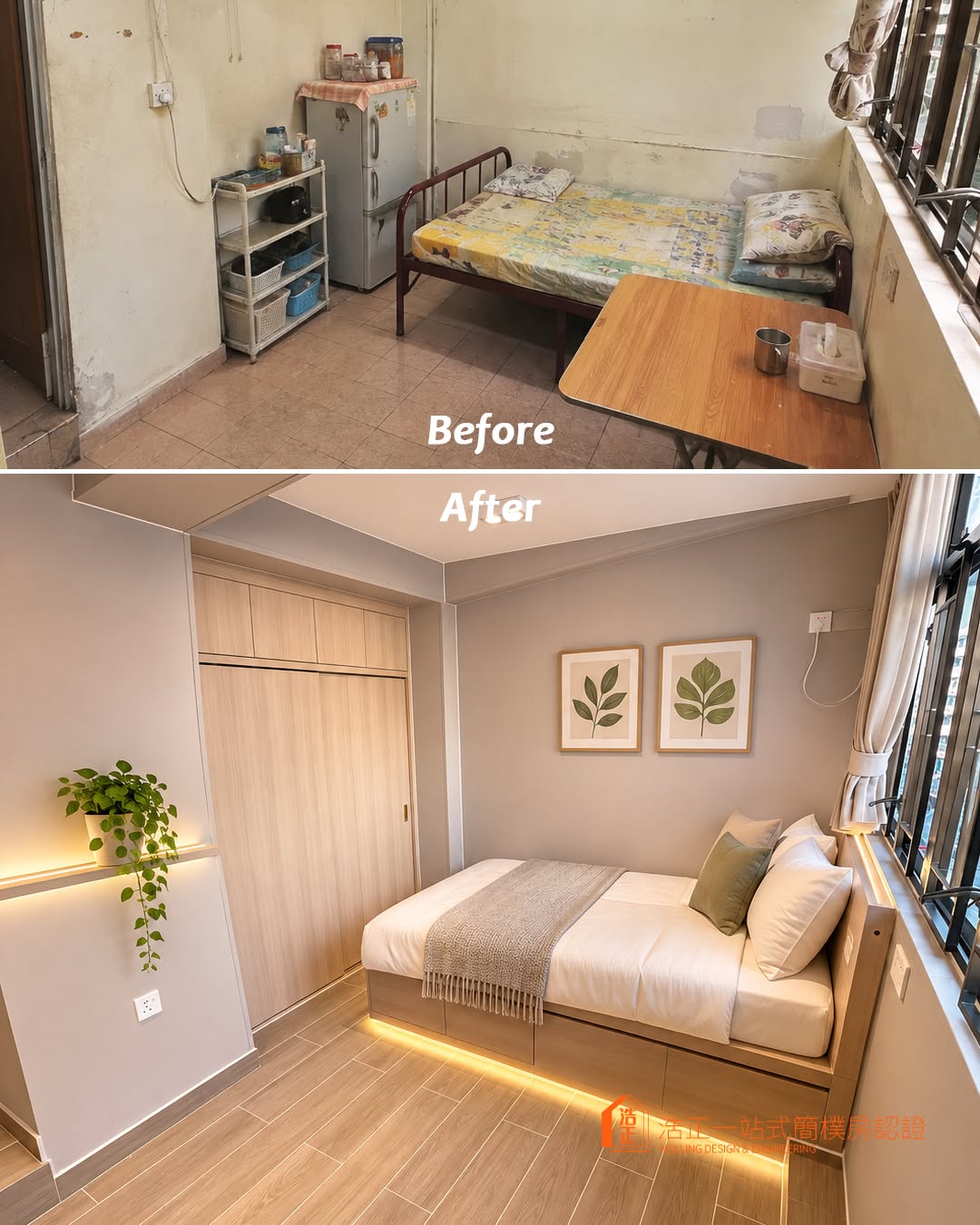
For detailed steps, see How to Apply for BHU Recognition: 5 Steps, Documents and Timeline. For one-stop handling from assessment and conversion to application, see Holling’s BHU certification service; real conversion examples are in our portfolio.
FAQ
Are BHUs government-provided housing?
No. BHUs are subdivided units let by private owners and recognised by the Government as meeting the standards. The Government’s “Light Public Housing” is a separate public housing programme.
Does grace-period registration mean the unit has BHU recognition?
No. Registration only allows a registered flat to keep being let until 28 February 2030; conversion and recognition must be completed in that period.
How long is BHU recognition valid?
Five years. Renewal must be applied for on Form BHU-01A within six to three months before expiry, with fresh certification by a specified professional. The renewal fee is $2,400 per SDU.
Can a room without a window become a BHU?
Under the Code of Practice, a habitable space must have at least one openable window facing the outdoors (glazed area not less than 0.1 m²), plus artificial lighting and mechanical ventilation. A windowless room generally needs the layout to be changed so that every habitable space has a window.
Sources
- Basic Housing Units website: Basic Housing Units Ordinance (scope, commencement)
- Basic Housing Units website: Grace-period registration (registration period, grace period, countdown period)
- Basic Housing Units website: Basic Housing Unit Recognition (eligibility, fees, validity, minimum standards)
- Government: Code of Practice on the Minimum Standards of Living Conditions for BHUs (SDU definition, detailed standards)
This article is general information only and is not legal advice. For individual cases, please refer to the Government’s latest announcements.